Showing posts with label Race Relations. Show all posts

November 03, 2016

Movie Club—Do The Right Thing

This month the Movie Club will be screening Do the Right Thing, written and directed by Spike Lee and starring Lee, Danny Aiello, and John Turturro.

On one of the hottest days in the summer, tensions in a racially mixed neighbourhood in Brooklyn start running high as the temperature rises. Mookie (Lee) works as a pizza delivery man for Sal (Aiello), and Italian-American who has been running the business in the neighbourhood for decades. When Buggin' Out (Giancarlo Esposito) questions Sal for only having Italian-Americans and no African-Americans on his "Wall of Fame" the confrontation that follows becomes the first sign of many culturally run-ins that the day has in store. With personal tensions coming to the fore and the frustrations of clashing cultures stewing, the day comes to an explosive end.


The film has been noted as "a polemically charged portrait of contemporary race relations" and "became a subject of controversy at the same time that critics praised its allusive imagery.” (Monaco, J. How to Read a Film: Art, Technology, Language, History, Theory. Oxford, New York, 2009. p. 410). It features a colourful set design and many tumultuous cultural explorations while being a solidly crafted ensemble piece and saw Lee shift from an independent filmmaker to become one of Hollywood's main iconoclasts.

The film will be screened on Wednesday 9 November at 6pm at Narellan Library, Corner of Queen and Elyard Street, Narellan. Tea, coffee, and biscuits provided, but BYO snacks are more than welcome. Stay after the screening to share your thoughts about the film and join in a discussion about the many though provoking moments in the film.

July 31, 2015

Book Review—Go Set a Watchman by Harper Lee


The much discussed release from Harper Lee. It has had many tongues wagging, from rumours of shady dealings by lawyers and publishers to fears that it will taint Lee’s legacy. Now that it has been released we can finally see for ourselves.

26 year old Jean Louise “Scout” Finch returns to Maycomb from New York to visit her family. Her visit comes at a time when many changes are happening in the country, particularly regarding race relations. But on this return trip she discovers that all the small changes that she has been witnessing in Maycomb are but a precursor to the sweeping social shift that will affect everyone, including her much loved and admired father, Atticus.


It is difficult not to make comparisons with To Kill a Mockingbird, Watchman being an earlier incarnation.  The most apparent difference is that Watchman does not have the charm of its successor. Gone is the child narrator, and although the mix of folk tales and tall tales that so enlivened Mockingbrid are here, these whimsicalities are only shades, with the dialogues and tales that would, in subsequent rewrites, become the exchanges that gave Mockingbird its uniqueness and heft apparent only in sketches.

The South’s struggle with segregation is still present, but where Mockingbird focused on the personal Watchman deals with the political dimensions. Its treatment of Atticus is more complex, Mockingbird being, after all, Scout’s reminiscences of her heroic father. In Watchman this idolisation is replaced with disillusion. He may have upheld Tom Robinson’s rights, but that does not mean this old Southern gent isn’t worried about Southern heritage, including all the fears of miscegenation, worries about state’s rights and individual liberties, and a mistrust of outside forces like the federal government and NAACP that go along with the Southern mentality. But even these passages are often laden with stereotypes and awkward phrasing, giving reminders that Watchman, even in published form, is a draft, both in how it handles its subject matter and also in its flow.

Despite its short comings it is not the death knell of Lee’s reputation. When viewed alongside Mockingbird it provides a unique study not just into the creation of a much loved classic, but of an author who began with an admirable if muddled story and was able, with some help from an editor, to craft it into a fascinating tale.
Andreas

February 20, 2015

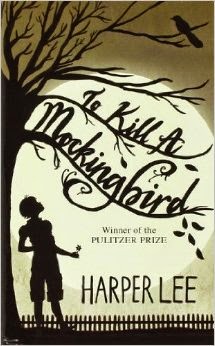
Book Review - To Kill a Mockingbird by Harper Lee

With Harper Lee’s second novel, Go Set a Watchman, due for release later this year, it seemed a perfect opportunity to revisit her original 1962 Pulitzer Prize winner.


Scout Finch lives in Depression struck Maycomb, Alabama, with her widowed father, Atticus, older brother, Jem, and house keeper, Calpurnia. Their childhood ventures during the summer are accompanied by Dill, a neighbour’s nephew. The talk of the town one year is Atticus defending Tom Robinson, a black man accused of raping a white woman. But the children have their own dilemma surrounding Boo Radley, the boogieman of the neighbourhood.
Lee creates the intimacy of a small town through a toy box of tales, collecting spook stories, folk tales, tall tales, and neighbourhood gossip.  But these are not simply exaggerated, occasionally humourous, fictions sung by residents about their fellow citizens. Stories in Maycomb have the ability to console or destroy, to commend or condemn.
Many appraisals of the novel focus on the depiction of race relations, with Tom Robinson becoming the titular mockingbird. But he is one of many in the story. Even his accuser, Mayella Ewell, tries desperately to sing, only to be chocked by her father’s brutal bawl. But the central mockingbird of the tale is Boo Radley, the gentle, generous soul, nested in his house, offering occasional whispered melodies.
To Kill a Mockingbird is both an ode to and living proof of the power of stories to change lives.
Andreas