Showing posts with label Classic. Show all posts

January 16, 2017

Film Review - The Dressmaker By Director Jocelyn Moorehouse

Starring Kate Winslet, Judy Davis, Liam Hemsworth and Hugo Weaving.
Winner of 5 AACTA Awards.
"Funny, poignant and full of heart.... destined to be an Aussie classic"- The Australian Women's Weekly.


The Dressmaker is a story about a beautiful young lady Tilly Dunnage who after years of working in Parisian fashion houses, returns home to a small outback Australian town. Using her style and charm she transforms the women of the town, deals with a past tragedy and falls in love along away.
A great story, Anne

April 07, 2016

Movie Club—Casablanca

This month the Movie Club will be screening Casablanca, starring Humphrey Bogart, Ingrid Bergman, and Paul Henreid, and directed by Michael Curtiz. Based on the play Everybody Comes to Rick's, a thinly veiled cry for America to become involved in World War II in opposition to the isolationist policies prevelant at the time. The film was green-lighted shortly after the bombing of Pearl Harbour and released the following year, with many rewrites to the original script.


Casablanca, in 'Unoccupied' Morocco, has become a haven for many trying to flee the ever encroaching terror of Nazism in Europe. The centre of night life is Rick's Cafe Americain, run by Rick Baline, a American expatriate with a tumultuous past. Despite the suffering and longing surrounding him, Rick prefers to avoid entanglements and proudly claims that he sticks his "neck out for nobody". All this changes one night when Ilse, the woman he loved in Paris years before, comes to town with her husband, the Resistance leader Victor Laszlo. Rick must choose whether to place his emotional turmoil aside and help Ilse and Victor escape the clutches of the local Nazi officer, Major Strasser, or to turn his back on the woman he loves.


The film was just another movie when it was made, as "no one making 'Casablanca' thought they were making a great movie." (Ebert, R. [September 15, 1996] “Casablanca [Review]”) But as time has passed the film has gathered new generations of viewers, with its quotable dialogue (some of the most quoted and certainly the most misquoted line in film), but also for its great use of lighting, cinematography, and the pitch-perfect casting. 

The film will be screened on Wednesday 13 April at 6pm at Narellan Library, Corner of Queen and Elyard Street, Narellan. Tea, coffee, and biscuits provided, but BYO snacks are more than welcome. Stay after the screening to share your thoughts about the film and join in a discussion about the films many classic and affecting scenes. 

August 04, 2015

Movie Club—Citizen Kane

This month the Movie Club will be screening one of the most celebrated and talked about films of all time: Orson Welles' Citizen Kane.

Released in 1941, the film was Welles' cinematic debut. It follows a newspaper reporter who attempts to find the meaning of 'Rosebud': the dying words of media tycoon Charles Foster Kane. In his search he consults Kane's former business manager, the diary of his deceased guardian, his second wife, and his oldest friend turned critic. Each tells of a different aspect of the larger than life Kane, but did any of them actually know him, or the identity and significance of Rosebud?


The film is celebrated for many reasons. In a time when Hollywood was driven by genre (like Film Noir, Musicals, and Westerns) and films were at the mercy of studios, writers, directors, actors and producers all having an individual impact on the final product, Welles' monument combined many genres as well as seeing the 25 year old Welles taking on all roles in the making of the film, one of the earliest and most megalomaniacal examples of auteurship.


From its non-linear, ever complicating narrative (reminiscent of early twentieth century novels like F. Scott Fitzgerald's The Great Gatsby and William Faulkner's As I Lay Dying and Absalom, Absalom!) to its superior framing and revolutionary cinematography, the film is certainly a milestone but also a rarity of the American film industry.

The screening will be held on Wednesday 12 August at Narellan Library. Not convinced of its greatness? Share your thoughts or use the discussion questions to get a debate going after the screening.

May 22, 2015

Book Review—Lolita by Vladimir Nabokov

Nabokov’s most celebrated and infamous novel. It is the story of Humbert Humbert, a middle-aged literature academic. While staying at the Haze residence to work on a multivolume comparison of French and English writers he meets Dolores, or, as he will come to know her, Lolita: “Light of my life, fire of my loins”. There is however a problem: Lolita is 12 years old, and Humbert goes to extreme lengths to see and hold Lolita, even marrying Charlotte Haze, her mother, whom he despises. Finally possessing that which he desires, Humbert regales through the troubling ‘relationship’, until in the end the already tawdry tale escalates to murder.

Humbert is unrepentant and neither is Nabokov’s prose. On full show are the writer’s love of and skill with striking phrases, puns, literary allusions and transformations that ooze over every line. It is alarming to have such vile subject matter in such incredible prose, and for many this is a stumbling block. It is a peculiarity that erotic elements in literature are often not viewed beyond the surface. It is accepted that Moby Dick is about more than just whaling, or that The Great Gatsby is about more than wild parties and excess in the Jazz Age. But with Lolita the obvious perversion is all some see, with Nabokov’s rich style viewed as an attempt at masquerading a “dirty little book”.

Lolita is best described as the twisted comedy of Humbert, a pompous, vile, self-absorbed unreliable narrator. He has his charms, chief among them his verbose wit, and many more flaws, primarily his misuse of his eloquence. But his is a hilarious, ironic tale of the collision of memory and desire in the mind of a vain wretch.
Andreas

May 01, 2015

Book Review—The Old Man and the Sea by Ernest Hemingway

′Ay,′ he said aloud. There is no translation for this word and perhaps it is just a noise such as a man might make, involuntarily, feeling the nail go through his hands and into the wood.

Santiago is an unfortunate Cuban fisherman who has not caught any fish for eighty-four days, while his fellow fishermen gain sizable catches. He has been deemed “salao”, the worst kind of unluckiness. But on the eighty- fifth day he believes his fortune will change by sailing his skiff far into the gulfstream. His instinct pays off and so begins a three day struggle with a giant marlin.


The text contains many biblical illusions, conjuring images of feuding brothers, dreams of lions, and numerous references to the crucifixion.  It is also one of Hemingway’s most unique novels, relying more heavily on allegory than the realism that characterises his works, although the work is inspired by real life events. It does feature Hemingway’s influential and trademark restrained prose, the simplicity of which is the strength of the novel combined with the Christian imagery.

The novel brought Hemingway back into the literary limelight and was specifically mentioned by the Nobel committee when awarding him the prize. This is fitting, as in many ways the work is a swan song. His last major work, it was preceded by a few poorly received novels, leaving many to think the old master was unable to produce a noteworthy tale as in his earlier years. But with The Old Man and the Sea Hemingway asserts his abilities, luring readers and fixing them with his many literary tricks and techniques, producing a simple but powerful tale.
Andreas


February 20, 2015

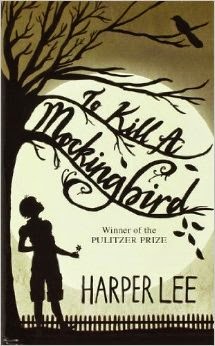
Book Review - To Kill a Mockingbird by Harper Lee

With Harper Lee’s second novel, Go Set a Watchman, due for release later this year, it seemed a perfect opportunity to revisit her original 1962 Pulitzer Prize winner.


Scout Finch lives in Depression struck Maycomb, Alabama, with her widowed father, Atticus, older brother, Jem, and house keeper, Calpurnia. Their childhood ventures during the summer are accompanied by Dill, a neighbour’s nephew. The talk of the town one year is Atticus defending Tom Robinson, a black man accused of raping a white woman. But the children have their own dilemma surrounding Boo Radley, the boogieman of the neighbourhood.
Lee creates the intimacy of a small town through a toy box of tales, collecting spook stories, folk tales, tall tales, and neighbourhood gossip.  But these are not simply exaggerated, occasionally humourous, fictions sung by residents about their fellow citizens. Stories in Maycomb have the ability to console or destroy, to commend or condemn.
Many appraisals of the novel focus on the depiction of race relations, with Tom Robinson becoming the titular mockingbird. But he is one of many in the story. Even his accuser, Mayella Ewell, tries desperately to sing, only to be chocked by her father’s brutal bawl. But the central mockingbird of the tale is Boo Radley, the gentle, generous soul, nested in his house, offering occasional whispered melodies.
To Kill a Mockingbird is both an ode to and living proof of the power of stories to change lives.
Andreas

June 04, 2014

Book Review - Wake in Fright by Kenneth Cook

Cook’s interrogation of the myth of mateship in the Australian outback follows John Grant, a Sydney born and educated school teacher, who does a stint in a microscopic town in Outback Australia. Looking forward to a six week escape in Sydney he passes through Bundanyabba. Little does he know he will not be getting to Sydney, instead falling into the dark wonderland that is ‘the Yabba’. This is a land of drink and death, of blokes and brutality, and after one night Grant finds himself a broke drifter. Desperate, he passes through the beer glasses of several hosts, experiencing new nightmares with each of these new mates. Upon sobering he realizes the peculiarity that meant you could “sleep with their wives, despoil their daughters, sponge on them, defraud them, do almost anything that would mean at least ostracism in normal society, and they would barely seem to notice it. But refuse to drink with them and you immediately become a mortal enemy.” This is the heart of Cook’s narrative, the harsh, drunken masculinity of ‘mateship’ and its disregard for all else. Like many literary works of the 1970s by male authors the female characters are underdeveloped, mere placeholders and window-dressing. But in the world Cook creates there would be little for them to do, apart from being used and abused. This savage land leaves Grant at the mercy of the two foes he comes to distrust the most, with beer becoming his saving grace and violence his only salvation. An antidote to the heroism of "Banjo" Patterson’s “Man from Snowy River”, Cook rounds out the myth that is the Outback. Wake in Fright is a worthwhile read for anyone wanting to really understand all about Australia. Andreas

December 12, 2012

Book Review - The Secret Life of Poems: a poetry primer by Tom Paulin


If you love words and how writers use them, try dipping into this little book with an entertaining review of 42 poems by well-known English poets including Coleridge, Tennyson, Byron, Hughes, Larkin and Wordsworth. Starting with a short and fairly painless explanation of technical terms for rhythm, rhyme and metre, each short chapter focuses on one short poem or excerpt, analyzing it for poetical devices to understand how the poet gets his or her effect. A discussion of the historical context and influences adds layers of meaning to each one. For example, did you know that Keats and Wordsworth were dangerously radical and political? Or that many of the allusions in their poems would have been understood by their contemporaries to have political connotations? You can also just read the poems and enjoy them – revisting old friends like Coleridge's :

In Xanadu did Kubla Khan

A stately pleasure dome decree:

Where Alph, the sacred river, ran

Through caverns measureless to man

Down to a sunless sea.

So twice five miles of fertile ground

With walls and towers were girdled round:

And there were gardens bright with sinuous rills,

Where blossomed many an incense-bearing tree;

And here were forests ancient as the hills

Enfolding sunny spots of greenery.

Incidentally, this last word, greenery, was invented by Coleridge in this poem! And yes, I think you should read them to the cat or any other family member willing to listen or just say them out loud to yourself!

Wendy

July 24, 2012

Classics: A Booklist


There's a reason why they're called Classics. They're the best books- the books that have stood the test of time and continue to make us love them. Are you in the mood for something truly great? We recommend the books below, available at Camden and Narellan.


What other classics do you like?

April 13, 2011

100 Free Ebooks

So, you have an iPad? And eReader? Or just want to view your favourite books from your PC? eBooks are often just as expensive as their physical counterparts. However, you can get a lot of ebooks online for free, particularly classics that have outlived their copyright. We've selected 100 books available online, for free, for Camden Council Library members. The list below is a combination of old favourites, classic literature, and a few bits and pieces you might never have come accross before. Be sure to let us know what you liked! And don't forget about our free downloadable audio books available through out website (On the right hand sidebar).


1. The Adventures of Sherlock Holmes by Sir Arthur Conan Doyle (657)


2. Adventures of Huckleberry Finn by Mark Twain (781)


3. Pride and Prejudice by Jane Austen (630)


4. Alice's Adventures in Wonderland by Lewis Carroll (469)


5. Jane Eyre by Charlotte Brontë (428)


6. Ulysses by James Joyce (407)


7. Secret Adversary by Agatha Christie (384)


8. A Tale of Two Cities by Charles Dickens (361)


9. The Picture of Dorian Gray by Oscar Wilde (352)


10. The Adventures of Tom Sawyer by Mark Twain (310)


11. Dracula by Bram Stoker (309)


12. The Time Machine by H. G. Wells (306)


13. The Count of Monte Cristo by Alexandre Dumas (302)


14. Moby Dick, or, the whale by Herman Melville (296)


15. Wuthering Heights by Emily Brontë (284)


16. Great Expectations by Charles Dickens (256)


17. Metamorphosis by Franz Kafka (248)


18. Les Misérables by Victor Hugo (238)


19. Frankenstein by Mary Wollstonecraft Shelley (237)


20. Gulliver's Travels by Jonathan Swift (237)


21. The War of the Worlds by H. G. Wells (222)


22. Around the World in 80 Days by Jules Verne (211)


23. Treasure Island by Robert Louis Stevenson (198)


24. The Wonderful Wizard of Oz by L. Frank Baum (193)


25. Peter Pan by J. M. Barrie (187)


26. Faust by Johann Wolfgang von Goethe (151)


27. Anna Karenina by graf Leo Tolstoy (149)


28. The Raven by Edgar Allan Poe (148)


29. The Jungle Book by Rudyard Kipling (146)


30. Anne of Green Gables by L. M. Montgomery (146)


31. A Princess of Mars by Edgar Rice Burroughs (133)


32. Robinson Crusoe by Daniel Defoe (121)


33. Lady Chatterley's Lover by D.H. Lawrence


34. The Call of the Wild by Jack London


35. Heart of Darkness by Joseph Conrad


36. David Copperfield by Charles Dickens


37. A Study In Scarlet by Arthur Conan Doyle


38. Aladdin and the Magic Lamp by Anonymous


39. The Scarlet Letter by Nathaniel Hawthorne


40. The House of a Thousand Candles by Meredith Nicholson


41. Mysterious Mr. Sabin by E. Phillips Oppenheim


42. The Call of Cthulhu by H. P. Lovecraft


43. A Runaway Brig by James Otis


44. The Arabian Nights by Andrew Lang


45. Security Risk by E.M. Clinton, Jr.


46. The Book of Khalid by Ameen Rihani


47. The Abandoned Room by Wadsworth Camp


48. Watchbird by Robert Sheckley


49. Motherload by David Collins-Rivera


50. The Woman in White by Wilkie Collins


51. The Accused by Harold R. Daniels


52. The Rider of Golden Bar by William Patterson White


53. The Confessions of Lady Beatrice by Unknown


54. Acres of Diamonds by Russell H. Conwell


55. Burning Daylight by Jack London


56. Cleopatra by Jacob Abbot


57. Eight Cousins by Louisa May Alcott


58. 2BR02B by Kurt Vonnegut


59. All Things Considered by G.K. Chesterton


60. Black Beauty by Anna Sewell


61. Candide by Voltaire


62. King Arthur and his Knights by Maude L. Radford


63. Leviathan by Thomas Hobbs


64. Lord Jim by Joseph Conrad


65. Main Street by Sinclair Lewis


66. Paradise Lost by John Milton


67. Plague Ship by Andre Norton


68. Tarzan of the Apes by Edgar Rice Burroughs


69. The Clue of the Twisted Candle by Edgar Wallace


70. The Elusive Pimpernel by Baroness Orczy


71. The Garden Party by Katherine Mansfield


72. The Last of the Mohicans by James Cooper


73. The Lodger by Marie Belloc Lowndes


74. The Odyssey by Homer


75. The Princess and the Goblin by George MacDonald


76. The Red Badge of Courage by Stephen Crane


77. The Sand-Hills of Jutland by Hans Christian Andersen


78. The Sleeping Beauty by C.S. Evans


79. The Story of Doctor Dolittle by Hugh Lofting


80. The Tenant of Wildfell Hall by Anne Bronte


81. The Water-Babies by Charles Kingsley


82. Twenty Thousand Leagues Under the Sea by Jules Verne


83. Utopia by Sir Thomas Moore


84. Vanity Fair by William Makepeace Thackeray


85. The Clique of Gold by Emile Gaboriau


86. The Chronicles of the Canongate by Sir Walter Scott


87. The Lure Of The Dim Trails by B. M. Bower


88. The Man With Two Left Feet and Other Stories by P.G. Wodehouse


89. The Ear in the Wall by Arthur Reave


90. The Fat and the Thin by Emile Zola


91. The Fortune Hunter by David Phillips


92. The Hand But Not the Heart by T.S. Arthur


93. The Moon Out Of Reach by Margaret Pedler


94. The Ne'er-Do-Well by Rex Ellington Beach


95. Rose in Bloom by Louisa Alcott


96. Fernley House by Laura Richards


97. From Jest to Earnest by Edward Payson Roe


98. The Valley of the Giants by Peter Kyne


99. Three Things by Elinor Glyn


100. What Sami Sings with the Birds by Joanna Spyri

May 07, 2009

Cranford


Cranford by Mrs Gaskell is a funny, satirical look at change in a closed off village society. Recently adapted into a very successful BBC series which the library also holds on DVD, the original novel holds up very well in its characterisations and comedy in spite of being written in the 1850s. The book is episodic and an excellent afterword explains that it was written in parts for Dickens' weekly publication Household Words. The consequent lack of an overall structure does not detract form the reader's gentle enjoyment. Interestingly, Mrs Gaskell apparently regretted killing off Captain Brown in an early chapter, so in adapting the novel for the BBC, the producers kept him alive. It is worth viewing the 'making off Cranford' special features for their discussion on the adaption.
Thoroughly recommended!
Wendy

February 05, 2009

Classic fiction at Narellan Library

We are very pleased to announce that our collection of Classics at Narellan Library has recently been improved with many new titles. New copies of titles by Jane Austen, Charles Dickens, Thomas Hardy, John Steinbeck, Albert Camus, Alexandre Dumas, George Eliot and Victor Hugo and others joined our existing titles. They are now easier to find as the Fiction collections at Narellan have been separated into genre groupings and therefore the classics have their own area of the shelves.
Another new classic title is Mary Shelley's Frankenstein. If you want some background on Mary Shelley, try 'Other People's Daughters: the Life and Times of the Governess' by Ruth Brandon held at Camden Library in the Biography Collection (B 923.7 BRA). both Mary and Claire Clairmont (her step-sister) feature in this exploration of the economic and social history of the governess. It is fortunate that there were some governesses who achieved some celebrity so that their records and papers were kept. Most governesses did not enjoy such a position. The book also includes information on early campaigners for female education and the establishment of the first female colleges at universities in England.
Wendy